 [1]
[1]
 [2]
[2]
(Image Source [2])
What is Fair Use? What Isn’t? Read on.
Dawn Thomsen from the Lamp [3] reached out recently to share some resources that can help teachers and students understand Fair Use. We were just discussing this in the Emerging Information Technology course I teach at The College of Westchester, so it really struck a chord.
Here’s how Wikipedia [4] introduces Fair Use:
Fair use is a legal doctrine that permits limited use of copyrighted material without acquiring permission from the rights holders. It is one type of limitation and exception to the exclusive rights copyright law grants to the author of a creative work. Examples of fair use in United States copyright law include commentary, search engines, criticism, parody, news reporting, research, teaching, library archiving and scholarship…
Fair Use and Content Creation
Fair Use can be rather complicated when it comes to creating content that includes excerpts of content created by others. It is by no means a simple black and white concept. The article on the Lamp web site, “WHY DO I NEED TO UNDERSTAND [5]FAIR USE? [5]“, is a great introduction and overview of the topic and can help anyone using or referencing others’ work.
This video offers another perspective on the vagaries of Fair Use, specific to video content:
Fair Use and Teaching and Learning
This PDF is a great 2 page summary of what you can and cannot do with content you are using for instructional purposes under the terms of Fair Use: http://www.halldavidson.net/copyright_chart.pdf [6]
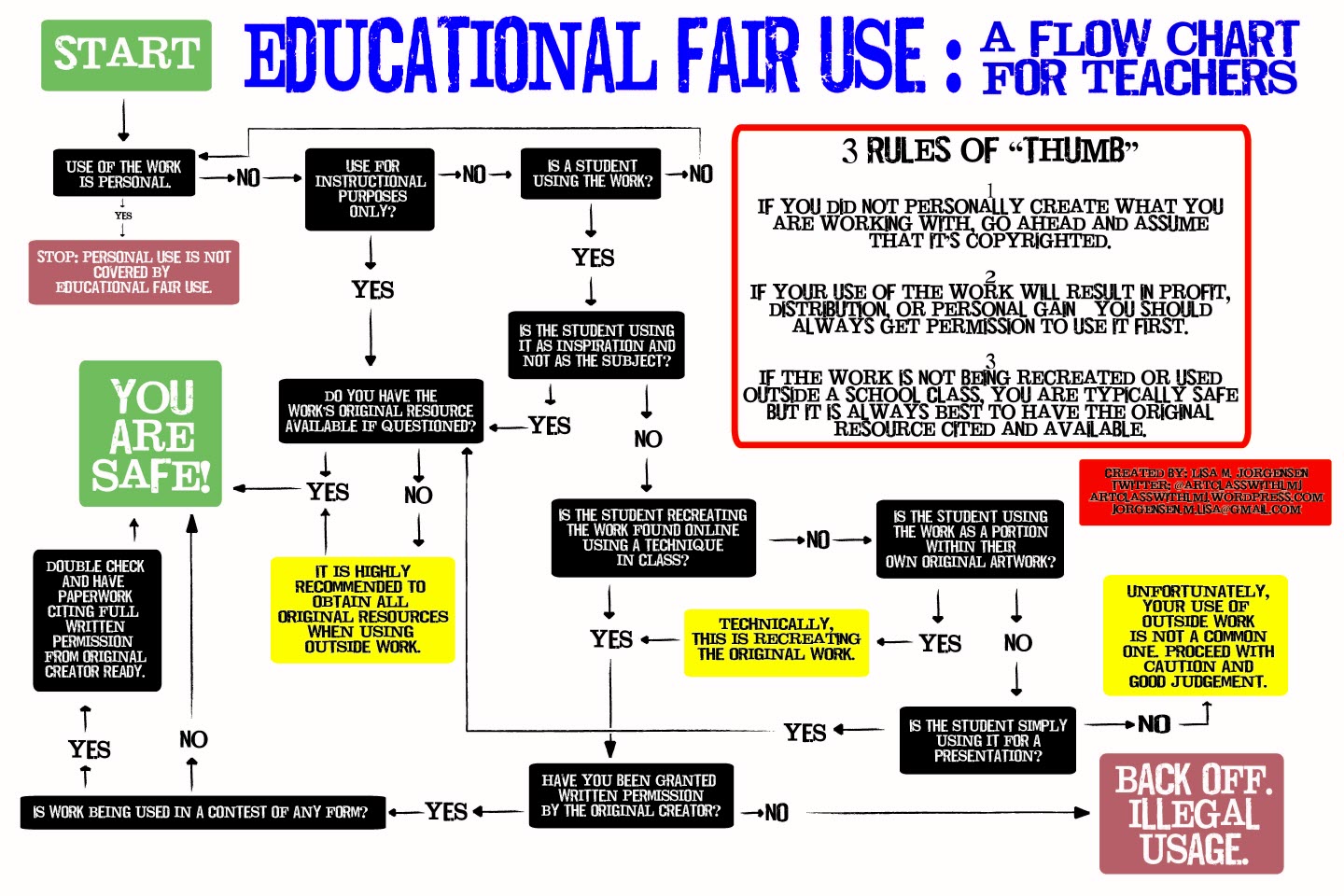
The Flow Chart below from Lisa Marie Jorgensen [7] is a good tool to assess whether your intended use, or a student’s, is valid under the provisions of Fair Use:

Of course, we love it when readers share good resources, so if you know of others that you think help clarify this issue, drop a comment and spread the wealth (of knowledge, that is)!
Related Posts
 [9]Enabling Students to Acquire Ownership of Learning - One Teacher’s Collaborative Approach [9]
- [10]Full Day Flipped Classroom Workshop, Friday, Oct. 16 in White Plains, NY [10]
- [11]10 Creative Ways to Use Interactive White Boards in the Classroom [11]
- [12]Printing From Your Smartphone – a Tutorial [12]

About Kelly Walsh [13]
Kelly Walsh is Chief Information Officer at The College of Westchester [14], in White Plains, NY, where he also teaches. In 2009, Walsh founded EmergingEdTech.com. He frequently delivers presentations on a variety of related topics at schools and conferences across the U.S. Walsh is also an author, and online educator, regularly running Flipped Class Workshops [15] online. His eBook, the Flipped Classroom Workshop-in-a-Book is available here [16]. Walsh became the Community Administrator for the Flipped Learning Network [17] in June of 2016. In his "spare time" he also writes, records, and performs original music ... stop by kwalshmusic.com [18] and have a listen!
[Disclaimer: The opinions expressed here are my own, or those of other writers, and not those of my employer. - K. Walsh]